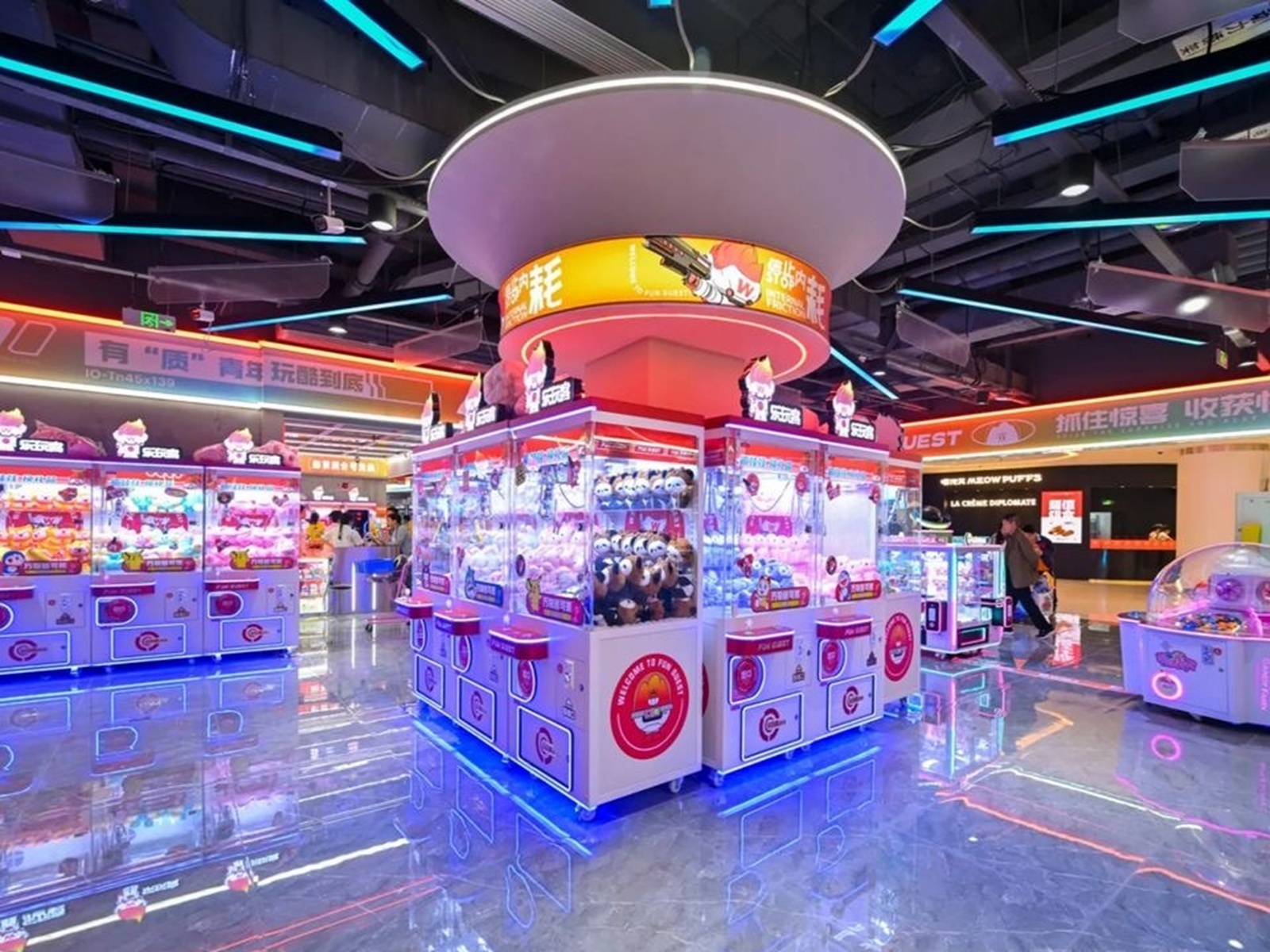
Crane machines are a staple of arcades, family entertainment centers, and retail venues. One of the key decisions when purchasing is whether to choose a single claw or double claw model. This guide compares the two types across performance, cost, and revenue potential.
1. Single Claw Crane Machines
Single claw cranes have one grabbing mechanism. They are the traditional and most common type found in arcades and malls.
GTFI Single Claw Models:
- Standard Single Claw Crane: 600×600×1800mm, coin/card payment, RGB LED, digital claw adjustment (1–10 levels)
- Crane with Audio: Same specifications with built-in stereo speakers and rich sound effects
- Mini Tabletop Crane: 500×500×1500mm, compact design for small spaces
- Deluxe LED Crane: Full-color RGB LED with programmable light effects
Advantages:
- Lower upfront cost – typically 20–30% less than dual claw
- Simpler mechanism – easier maintenance
- Proven player acceptance – players are familiar with the format
- Versatile – works with a wide range of prize sizes
Disadvantages:
- One prize per play – slower turnover
- Less visual excitement than dual claw
2. Double Claw Crane Machines
Double claw cranes have two independent grabbing mechanisms. They allow players to win multiple prizes simultaneously, creating a more exciting experience.
GTFI Double Claw Model:
- Dual Claw Crane: 700×700×1900mm, dual independent claws, simultaneous grab capability, coin/card payment, independent digital claw adjustment (1–10 levels per claw)
Advantages:
- Higher engagement: Players are excited by the possibility of winning two prizes at once
- Faster prize turnover: Each play can deliver two prizes, increasing throughput
- Higher revenue potential: More prizes won = more satisfaction = more repeat plays
- Social sharing: Winning two prizes is more "Instagrammable"
Disadvantages:
- Higher upfront cost
- More complex mechanism – two claws to maintain
- Requires more space (700×700mm footprint)
3. Direct Comparison Table
| Feature | Single Claw | Double Claw |
|---|---|---|
| Claw Count | 1 | 2 (independent) |
| Prize Per Play | 1 | Up to 2 |
| Footprint (L×W) | 600×600mm | 700×700mm |
| Weight | 85kg | 105kg |
| Upfront Cost | $$ | $$$ |
| Claw Adjustment | Digital 1–10 levels | Independent digital per claw |
| Revenue Potential | Good | Higher |
| Maintenance Complexity | Simple | More complex |
| Best For | General arcades, small venues | High-traffic venues, premium locations |
4. Revenue Analysis
While dual claw machines cost more upfront, they often generate higher revenue through:
- Increased plays per hour: Each play can yield two prizes, encouraging players to keep playing
- Higher perceived value: Getting two prizes feels like a better deal, increasing satisfaction and repeat visits
- Reduced prize cost per play: Prizes are often cheaper in bulk, so offering two prizes per play may only increase cost by 50% while doubling perceived value
Many operators report 30–50% higher revenue from dual claw machines compared to single claw units in similar locations.
5. Which Should You Choose?
Choose Single Claw If:
- You have a limited budget
- Your venue has limited space
- You are testing a new location
- You prefer simple maintenance
- Your prizes are small and single-claw is sufficient
Choose Double Claw If:
- You have high foot traffic
- You want maximum revenue per square meter
- Your venue targets families and groups
- You have the budget for premium equipment
- You want a more exciting, shareable player experience
Practical Selection Checklist
Commercial entertainment equipment should be selected around usage frequency, available floor space, operator workflow, customer traffic, and serviceability. A machine that fits the theme but is difficult to maintain can create higher operating costs over time.
What to Confirm Before Ordering
- Define the venue type, expected daily usage, available floor area, and target customer group.
- Check machine dimensions, power requirements, noise, ventilation, safety features, and access for loading or installation.
- For coin or payment systems, confirm currency compatibility, payment method, capacity, and local operating requirements.
- For crane or game machines, compare mechanism type, control settings, prize or load compatibility, and adjustment options.
- Confirm spare parts, remote support, warranty coverage, and the procedure for troubleshooting common failures.
For a quotation request: For quotation requests, provide venue type, machine quantity, available space, voltage, target market, payment system, and destination country. This helps suppliers propose a configuration that fits the actual operating environment.
Need help matching equipment to a specific application? Provide the operating conditions, required quantity, destination, and key technical requirements when requesting a quotation.
❓ Frequently Asked Questions
A: No. The chassis, control board, and mechanism are different. Purchase a dual claw machine from the start if you need that capability.
A: Not necessarily. GTFI dual claw machines are built with the same quality as single claw units. Regular maintenance keeps both types running reliably.
A: Dual claw machines tend to attract more attention due to the novelty and visual excitement of two claws.
💬 Need help choosing the right crane for your venue?
Talk to Our Entertainment Experts →