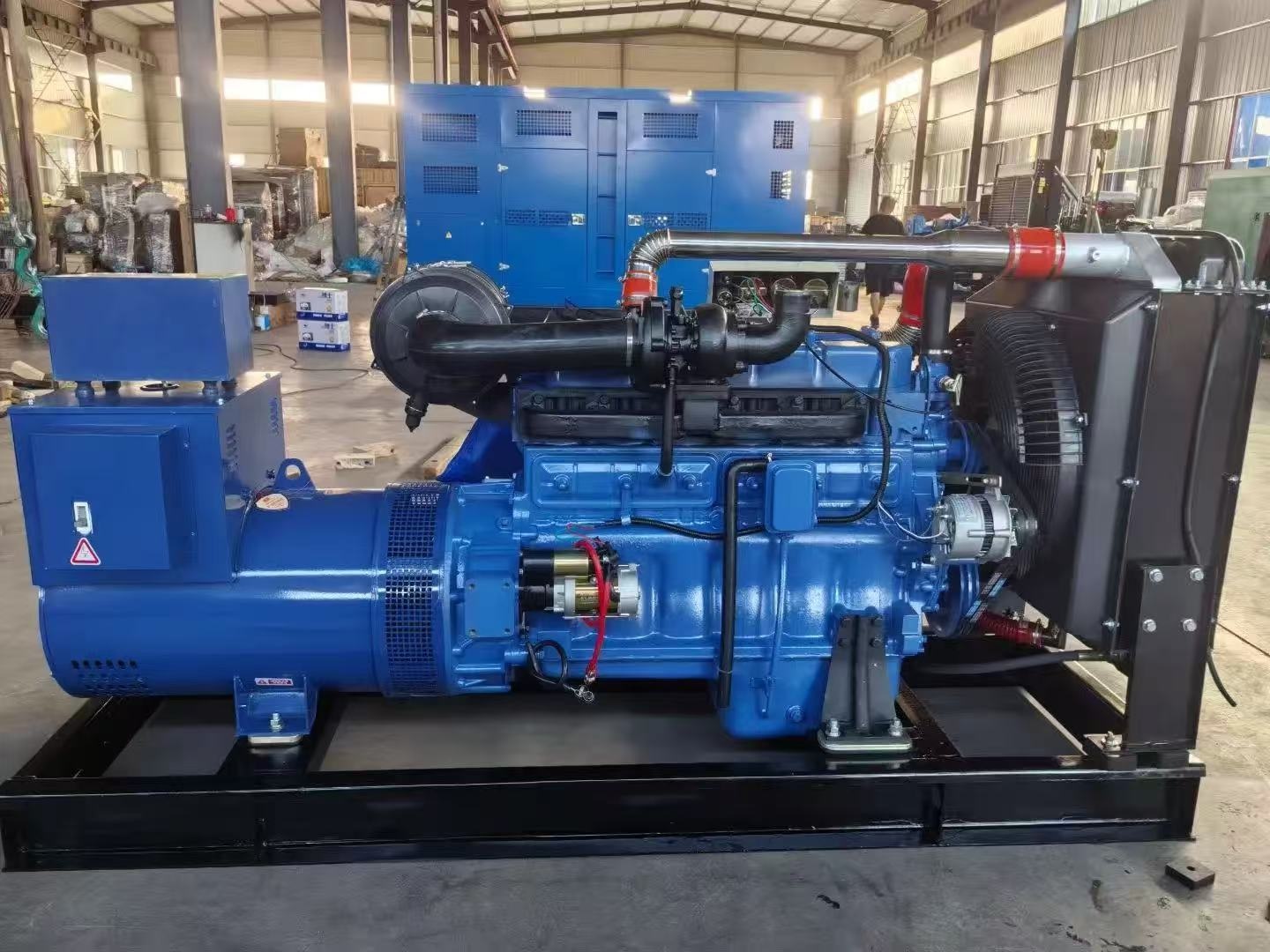
Industrial generator sets are the backbone of reliable power for businesses. Whether you need backup power for a factory, primary power for a remote mine, or standby power for a hospital, choosing the right genset is a critical decision.
1. Industrial Generator Set Sizing
Industrial generators are sized for prime power (continuous operation) or standby power (emergency backup).
- Standby power: For emergency use only. Can run at full capacity for short periods.
- Prime power: For continuous operation. Recommended to run at 70-80% of rated capacity.
- Power factor: Industrial loads often have a lower power factor (0.8 typical). Size accordingly.
2. Industrial Generator Applications by Size
- 15-30kW: Small workshops, retail stores, small offices
- 30-60kW: Restaurants, small factories, agriculture operations
- 60-100kW: Medium factories, commercial buildings, schools
- 100-150kW: Large factories, hospitals, data centers (small)
- 150-200kW: Industrial plants, large hospitals, mining operations
3. Engine Options for Industrial Gensets
GTFI offers four engine brands for industrial gensets:
- Weichai: Value option, widely available, 15-1,000kW
- Yuchai: High-quality Chinese engine, 10-600kW
- Cummins: Premium global brand, 15-2,000+kW
- Perkins: European quality, 10-800kW
4. Open Frame vs Silent for Industrial Use
- Open Frame: Lower cost, better cooling, louder. Ideal for factories, remote sites, and outdoor installations.
- Silent (Enclosed): Quieter, weather-protected, higher cost. Ideal for hospitals, hotels, and urban installations.
5. Key Features to Specify
- Automatic Transfer Switch (ATS): Essential for standby applications
- Digital Controller: For remote monitoring and diagnostics
- Fuel tank size: Larger tanks reduce refueling frequency
- Weather protection: IP rating for outdoor installations
- Noise reduction: Soundproof enclosures for residential areas
Practical Selection Checklist
Before requesting a quotation, define the actual electrical load and the operating environment rather than selecting a generator only by its headline kW rating. The best choice balances starting current, continuous load, fuel type, runtime, noise, mobility, service access, and local power requirements.
What to Confirm Before Ordering
- List continuous loads and identify motors, pumps, compressors, welders, or other equipment with high starting current.
- Confirm rated and standby/maximum output figures and keep an appropriate operating margin instead of running continuously at the limit.
- Specify voltage, frequency, single-phase or three-phase output, and any required automatic transfer or remote-start functions.
- Consider fuel availability, expected daily runtime, tank size, refueling access, ambient temperature, altitude, and ventilation.
- For mobile or residential use, check enclosure, noise, wheel/transport requirements, weather protection, and safe exhaust routing.
For a quotation request: For an industrial quotation, provide the load list, target voltage/frequency, expected runtime, application, destination country, and required quantity. Those details make it easier to compare generator configurations on a like-for-like basis.
Need help matching equipment to a specific application? Provide the operating conditions, required quantity, destination, and key technical requirements when requesting a quotation.
❓ Frequently Asked Questions
A: Standby power is for emergency use; prime power is for continuous operation. Prime power generators are built for longer run times.
A: As long as fuel and oil are maintained, industrial gensets can run 24/7. Regular maintenance is essential.
A: Standard industrial gensets are available in 15-30 days. Custom orders may take 30-45 days.
💬 Need an industrial generator for your business?
Talk to Our Experts →