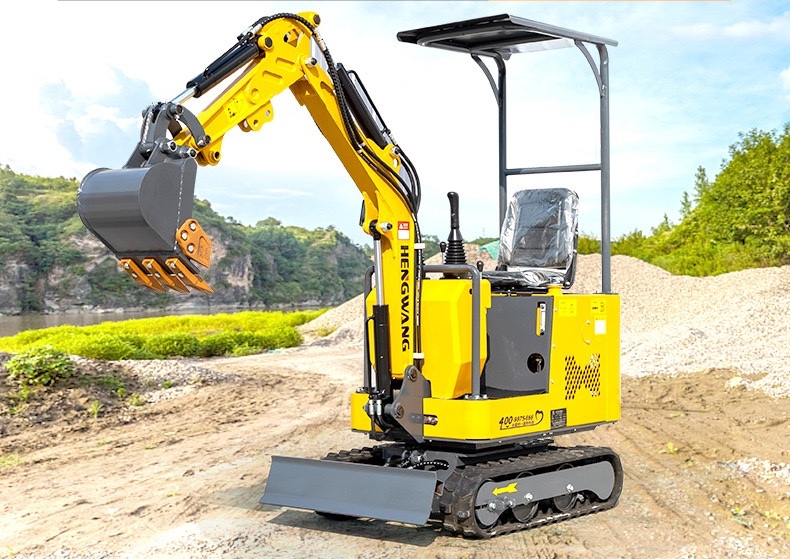
1. What Is a Mini Excavator?
A mini excavator (also called a compact excavator) is a tracked or wheeled vehicle with a backfill blade and a digging arm. They are used for digging, trenching, demolition, landscaping, and material handling in tight spaces where larger excavators cannot operate.
2. Mini Excavator Size Classes
0.6–0.8 Ton
Gasoline, mechanical control.
Best for: Narrow spaces, landscaping
0.8–1.0 Ton
Pilot control, higher efficiency.
Best for: Utility work, trenching
1.1–1.35 Ton
Diesel or gasoline, hydraulic pilot.
Best for: General contracting, construction
2.0–2.5 Ton
Higher power, larger bucket.
Best for: Roadworks, landscaping
3.0–3.5 Ton
Heavy-duty diesel, water-cooled.
Best for: Mining, tough terrain, heavy excavation
3. Gasoline vs Diesel – Which Engine Is Right?
- Gasoline: Quieter, lower initial cost, easier starting. Ideal for smaller machines (0.6-1.0 ton).
- Diesel: More fuel-efficient, higher torque, longer lifespan. Better for heavy-duty applications and larger machines (1.1-3.5 ton).
4. Mechanical vs Pilot Control
- Mechanical Control: Direct mechanical linkage. Simple, reliable, cost-effective.
- Pilot Control: Hydraulic pilot system provides smoother, more precise operation with less effort.
- Hydraulic Pilot: Advanced pilot system with proportional control for the most precise operation.
5. Key Attachments for Mini Excavators
- Buckets: Standard digging buckets in various sizes (0.018-0.1m³)
- Breakers (Hydraulic Hammers): For demolition and rock breaking
- Augers: For drilling holes for fence posts and foundations
- Grabs / Grapples: For handling materials and debris
Practical Selection Checklist
Construction equipment should be selected around the job rather than around machine size alone. Excavators, transporters, and attachments must work within site access, ground conditions, lifting limits, transport restrictions, and the required production rate.
What to Confirm Before Ordering
- Define the material, digging or carrying task, working depth, reach, and expected daily workload.
- Check operating weight, machine width, height, ground clearance, turning space, and transport dimensions against the job site.
- Match engine power, hydraulic flow, attachment compatibility, and control system to the intended attachment and duty cycle.
- For tracked machines, consider slope, ground pressure, traction, mud, and the balance between mobility and payload.
- Confirm service access, wear parts, attachment availability, transport arrangements, and operator requirements before ordering.
For a quotation request: For quotation requests, provide the site conditions, required attachment, material, working depth or payload, access limits, destination country, and expected quantity. This produces a much more useful equipment recommendation.
Need help matching equipment to a specific application? Provide the operating conditions, required quantity, destination, and key technical requirements when requesting a quotation.
❓ Frequently Asked Questions
A: 1 unit (sample orders supported).
A: 15-30 days after deposit.
A: Yes, full customization available.
💬 Need help choosing the right excavator?
Ask Our Experts →