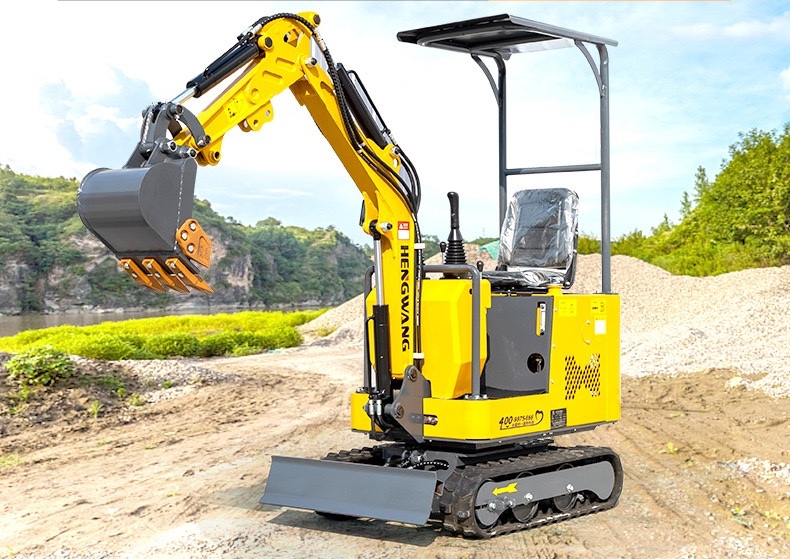
Choosing the right mini excavator size is crucial for project efficiency. Too small and you'll struggle with power and reach. Too large and you'll have trouble maneuvering in tight spaces — and pay more than necessary.
1. Overview of Mini Excavator Size Classes
| Size Class | Model Range | Weight | Engine | Control Type | Best For |
|---|---|---|---|---|---|
| 0.6-0.8 Ton | 10-1, 10-2 | 0.64-0.68 T | Gasoline | Mechanical | Narrow spaces, landscaping, indoor demolition |
| 0.8-1.0 Ton | 13W, 15, 16W | 0.82-0.93 T | Gasoline | Pilot | Utility work, trenching, orchards |
| 1.1-1.35 Ton | 17-1, 17-2, 18W-1/2 | 1.1-1.35 T | Diesel/Gas | Hydraulic Pilot | General contracting, construction |
| 2.0-2.5 Ton | 20W, 25, 26 | 1.41-2.15 T | Diesel | Pilot | Roadworks, larger landscaping, light excavation |
| 3.0-3.5 Ton | 30, 35, 35W | 2.36-2.8 T | Diesel | Pilot | Mining, tough terrain, heavy excavation |
2. Size Selection by Application
- 0.6-0.8 Ton: Indoor demolition, landscaping, tight urban sites, greenhouse work
- 0.8-1.0 Ton: Small construction sites, utility trenching, orchard digging, landscaping
- 1.1-1.35 Ton: General construction, foundation digging, material handling, agriculture
- 2.0-2.5 Ton: Road construction, drainage work, medium excavation, commercial landscaping
- 3.0-3.5 Ton: Mining, quarry work, heavy excavation, large construction projects
3. Key Specifications to Consider
- Digging depth: Ranges from 1.6m to 2.7m depending on size
- Bucket capacity: 0.018-0.1m³
- Track width: 850-1,600mm — affects stability and access
- Engine power: 8.5kW (gasoline) to 36.8kW (diesel)
- Hydraulic system: Reliability matters. GTFI uses Tianjin, Jiangsu Taiheng, and Boxin components.
4. Gasoline vs Diesel for Mini Excavators
- Gasoline: Quieter, lower cost, easier start. Best for smaller machines and light use.
- Diesel: More power, better fuel efficiency, longer life. Best for larger machines and heavy use.
Size Selection
Choose excavator class from the required digging depth, reach, attachment, lifting need, access width, ground conditions, and transport constraints. Operating weight is useful, but it should not be the only selection criterion.
What to Confirm Before Ordering
- Define the material, digging or carrying task, working depth, reach, and expected daily workload.
- Check operating weight, machine width, height, ground clearance, turning space, and transport dimensions against the job site.
- Match engine power, hydraulic flow, attachment compatibility, and control system to the intended attachment and duty cycle.
- For tracked machines, consider slope, ground pressure, traction, mud, and the balance between mobility and payload.
- Confirm service access, wear parts, attachment availability, transport arrangements, and operator requirements before ordering.
For a quotation request: For quotation requests, provide the site conditions, required attachment, material, working depth or payload, access limits, destination country, and expected quantity. This produces a much more useful equipment recommendation.
Need help matching equipment to a specific application? Provide the operating conditions, required quantity, destination, and key technical requirements when requesting a quotation.
❓ Frequently Asked Questions
A: GTFI offers the 10-1 and 10-2 models at 0.64-0.68 tons.
A: GTFI offers the 35 and 35W models at 2.36-2.8 tons.
A: Yes, most GTFI mini excavators support hydraulic breakers and other attachments.
💬 Need help choosing the right excavator size?
Talk to Our Experts →