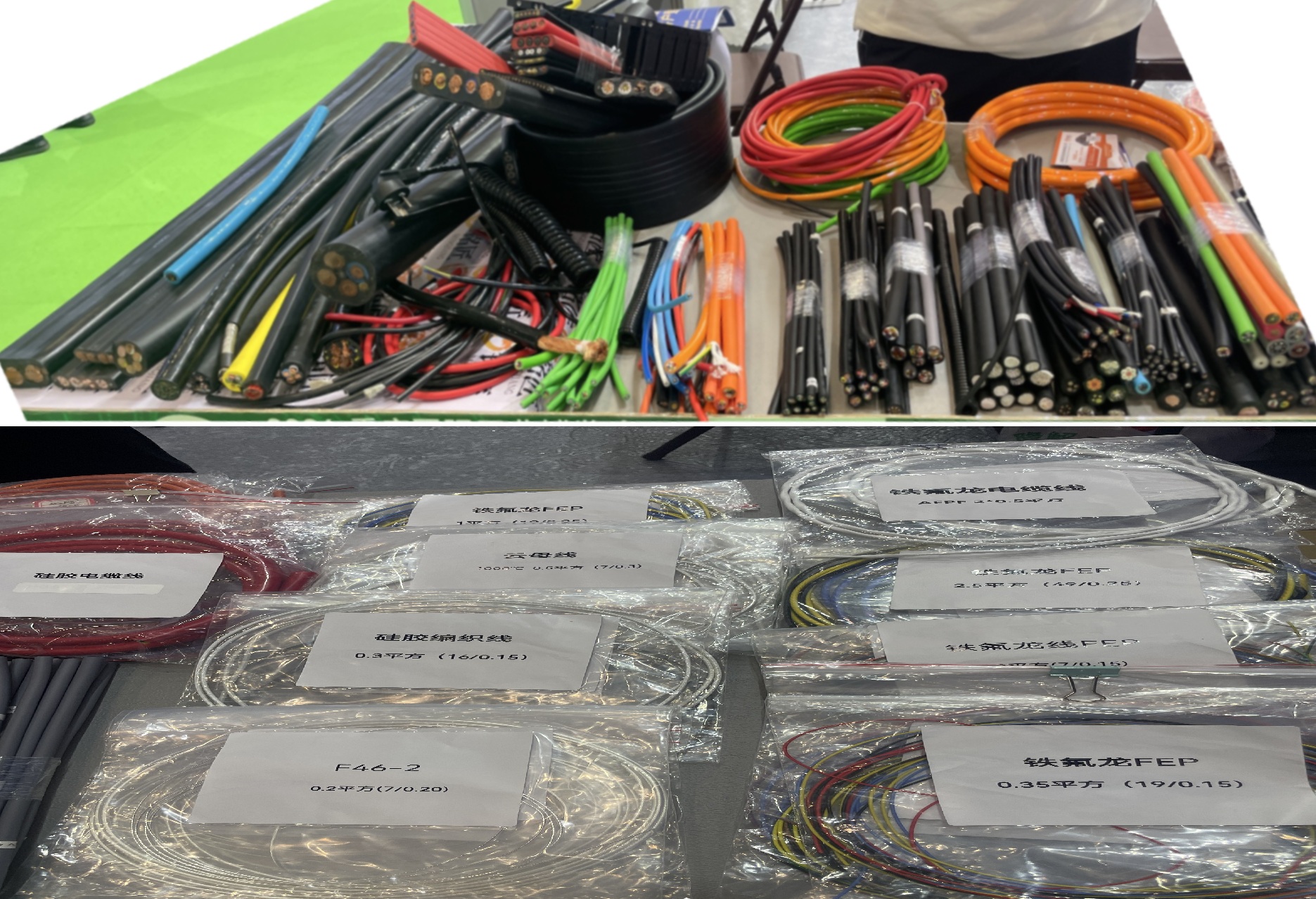
Drag chain cables (also called cable carrier cables) are designed for continuous flexing in automated machinery, robotics, and conveyor systems. Choosing the wrong cable leads to premature failure, costly downtime, and safety risks. This guide helps you select the right drag chain cable for your application.
1. What Is a Drag Chain Cable?
A drag chain cable is a flexible cable designed to withstand repeated bending, torsion, and abrasion within a cable carrier (drag chain). These cables are used in CNC machines, robotic arms, automated production lines, and material handling systems.
GTFI Drag Chain Cables:
- G610 Series: PVC sheath, 12M flex cycles, CE/RoHS – cost-effective for standard applications
- GP609 Series: PVC sheath with shielding, 12M flex cycles – for EMI-sensitive environments
- F610 Series: PUR sheath, 20M flex cycles – superior mechanical resistance, oil-resistant, -40°C to 105°C
- 888 Series: Torsion-resistant PUR, ±180° flex – specifically designed for robotic systems
2. Key Selection Factors
2.1 Flex Life – Cycles Before Failure
Flex life is the number of bending cycles a cable can withstand before failure. This is the most critical specification for drag chain cables.
- GTFI G610/GP609: 12 million cycles – suitable for standard automation with moderate movement
- GTFI F610: 20 million cycles – for high-speed, high-frequency applications
- GTFI 888: Torsion-resistant, ideal for robotic arms with twisting motion
In high-speed applications (e.g., pick-and-place machines, high-speed conveyor systems), choose cables with 20M+ cycles.
2.2 Sheath Material – PVC vs PUR
| Material | PVC | PUR |
|---|---|---|
| Flex Life | 12M cycles | 20M cycles |
| Temperature Range | -20°C to 80°C | -40°C to 105°C |
| Oil Resistance | Moderate | Excellent |
| Abrasion Resistance | Good | Excellent |
| Cost | Lower | Higher |
| Best For | Standard automation | Harsh environments, high-flex applications |
Choose PUR (F610) for applications with oil, coolant, extreme temperatures, or high mechanical stress. Choose PVC (G610) for cost-sensitive, standard automation projects.
2.3 Shielding – When Do You Need It?
- Unshielded (G610, F610): Suitable for power transmission and general use where EMI is not a concern
- Shielded (GP609): Required when running near variable-frequency drives (VFDs), motors, or sensitive control signals. Shielded cables prevent electromagnetic interference (EMI).
GTFI GP609 uses a braided copper shield with 85% coverage, providing excellent EMI protection for control and signal cables.
2.4 Temperature Range
- Standard PVC (G610): -20°C to +80°C – suitable for most indoor industrial environments
- PUR (F610, 888): -40°C to +105°C – for cold storage, outdoor, or high-heat areas
- Special high-temperature cables: GWF200 (200°C) and GWX500 (1200°C) for extreme environments
2.5 Certifications
GTFI drag chain cables are certified with CE, RoHS, and UL, ensuring compliance with international safety and environmental standards. UL certification is particularly important for North American markets.
3. Application Recommendations
| Application | Recommended Cable | Key Features |
|---|---|---|
| CNC machining centers | F610 PUR | 20M cycles, oil-resistant, -40°C to 105°C |
| High-speed conveyor systems | F610 PUR | High flex life, abrasion-resistant |
| Robotic arms | 888 Torsion-resistant | ±180° torsion, PUR sheath |
| Automated assembly lines | G610 PVC | Cost-effective, 12M cycles |
| VFD-fed motor cables | GP609 Shielded | EMI protection, PVC sheath |
| Woodworking machinery | G610 PVC | Standard flex, dust-resistant |
4. Installation Best Practices
- Bending radius: Minimum bending radius should be 7.5–10× the cable diameter – never exceed this limit
- Fill ratio: Cable area should not exceed 60% of the drag chain cross-section – leave room for movement
- Cable arrangement: Separate power and signal cables with a divider; do not twist cables
- Mounting: Secure cables firmly at the fixed end; allow free movement at the moving end
- Strain relief: Use appropriate strain relief connectors to prevent cable damage at termination points
Practical Selection Checklist
Industrial cable selection depends on electrical load and mechanical movement as much as conductor size. Temperature, flexing frequency, bend radius, drag-chain travel, chemical exposure, shielding, and installation method can determine service life.
What to Confirm Before Ordering
- Specify voltage, current, conductor count, conductor size, insulation type, and the applicable installation standard.
- For moving cables, define travel length, cycle frequency, minimum bend radius, speed, acceleration, and torsion requirements.
- Check operating temperature, oil or chemical exposure, water, abrasion, UV exposure, and flame requirements.
- Decide whether shielding, twisted pairs, grounding conductors, or special connectors are needed for signal and EMC performance.
- Confirm outer diameter, termination method, available replacement length, and installation space before ordering.
For a quotation request: For quotation requests, provide the electrical specification, movement pattern, environment, required length, connector details, destination country, and quantity. These details are more useful than selecting a cable only by conductor count.
Need help matching equipment to a specific application? Provide the operating conditions, required quantity, destination, and key technical requirements when requesting a quotation.
❓ Frequently Asked Questions
A: PUR (polyurethane) offers superior flex life (20M vs 12M), wider temperature range (-40°C to 105°C), and better oil/abrasion resistance. PVC is more cost-effective for standard applications.
A: For high-speed automated machinery, choose 20M+ cycles. For standard automation with moderate speed, 12M cycles is sufficient.
A: No. Standard cables are not designed for continuous flexing and will fail quickly. Always use cables specifically rated for drag chain applications.
💬 Need help selecting the right drag chain cable for your automation project?
Talk to Our Cable Engineers →