1. What Are Drag Chain Cables?
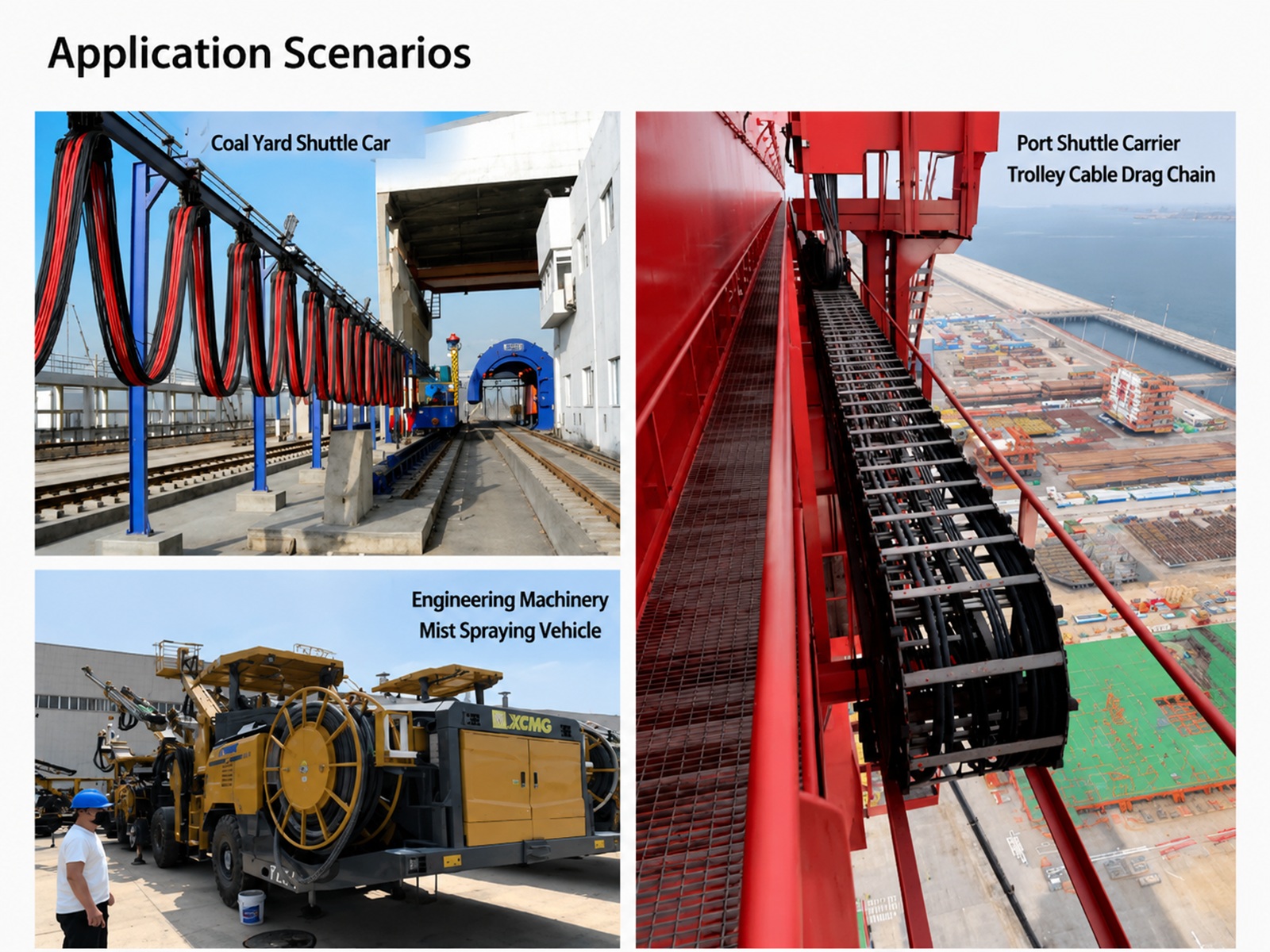
Drag chain cables (also called continuous flex cables) are designed for applications where cables are subjected to repeated bending and movement inside cable carriers (drag chains). They are used in robotics, CNC machines, automated production lines, and material handling equipment.
2. Key Selection Criteria
- Flex Life (Cycles): GTFI drag chain cables offer 12-20 million cycles. Standard cables typically offer only 2-5 million cycles.
- Sheath Material: PVC (standard), PUR (oil-resistant, higher durability), or silicone (high-temperature).
- Shielding: Required for environments with electromagnetic interference (EMI).
- Temperature Range: Standard: -20°C to 80°C, High-temp: up to 200°C, Ultra-high-temp: up to 1200°C.
3. GTFI Drag Chain Cable Series
- G610 (PVC): Standard flex cable, 12M cycles, CE/RoHS
- GP609 (Shielded): Shielded version for EMI protection, 12M cycles
- F610 (PUR): Oil-resistant, 20M cycles, -40°C to 105°C
- 888 (Robot Cable): Torsion-resistant, ±180° flex, for robotic systems
- GWF200 (High Temp): Fluoroplastic, up to 200°C
- GWX500 (Ultra High Temp): Mica insulation, up to 1200°C
4. When to Use Shielded vs Unshielded
- Unshielded: For clean environments without electrical noise. Lower cost and more flexible.
- Shielded: Required when cables run near motors, drives, or other EMI sources. Prevents signal interference.
Practical Selection Checklist
Industrial cable selection depends on electrical load and mechanical movement as much as conductor size. Temperature, flexing frequency, bend radius, drag-chain travel, chemical exposure, shielding, and installation method can determine service life.
What to Confirm Before Ordering
- Specify voltage, current, conductor count, conductor size, insulation type, and the applicable installation standard.
- For moving cables, define travel length, cycle frequency, minimum bend radius, speed, acceleration, and torsion requirements.
- Check operating temperature, oil or chemical exposure, water, abrasion, UV exposure, and flame requirements.
- Decide whether shielding, twisted pairs, grounding conductors, or special connectors are needed for signal and EMC performance.
- Confirm outer diameter, termination method, available replacement length, and installation space before ordering.
For a quotation request: For quotation requests, provide the electrical specification, movement pattern, environment, required length, connector details, destination country, and quantity. These details are more useful than selecting a cable only by conductor count.
Need help matching equipment to a specific application? Provide the operating conditions, required quantity, destination, and key technical requirements when requesting a quotation.
❓ Frequently Asked Questions
A: Typically 5-8× the cable diameter for continuous flex applications.
A: CE, RoHS, UL, and ISO9001.
💬 Need help selecting the right cable?
Ask Our Experts →