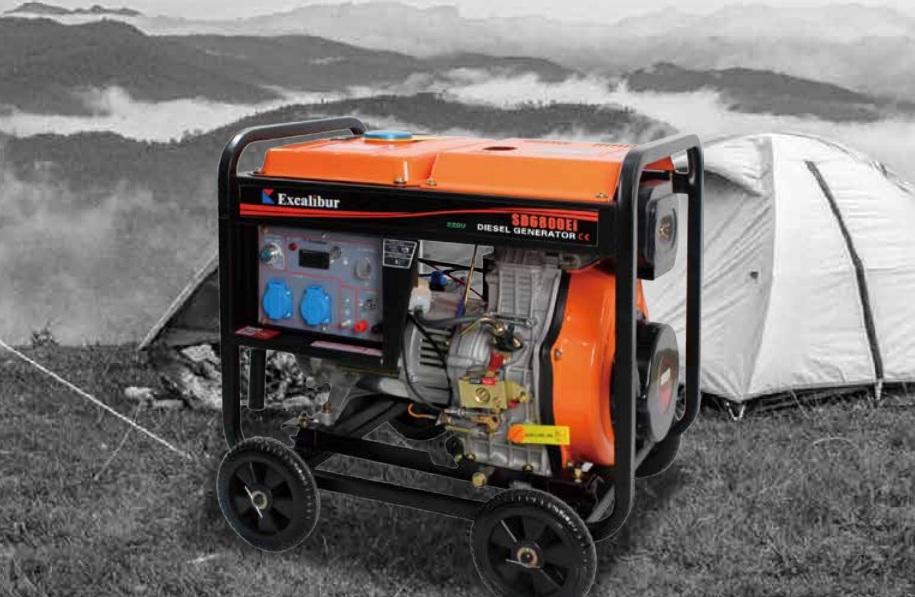
The starting method is often overlooked but very important when choosing a generator. Different starting methods directly affect convenience, reliability, and long-term maintenance costs.
GTFI offers generators with electric start, recoil start, and dual-mode (electric + recoil) to meet needs from home backup to industrial applications.
1. Recoil Start (Pull Start)
How it works: Pulling a rope rotates the flywheel to start the engine. This is the most traditional and simplest starting method.
- Best for: Small generators, outdoor use, emergency backup
- Advantages: Simple construction, no battery needed, high reliability, low cost
- Disadvantages: Requires physical effort, difficult in cold weather, repeated pulls can be tiring
- GTFI Models: S2000D, S4000D and other small diesel generators
2. Electric Start
How it works: A battery powers a starter motor that rotates the engine. Press a button or turn a key to start.
- Best for: Medium to large generators, frequent use, home backup
- Advantages: Effortless starting, one-button operation, easy in cold weather
- Disadvantages: Requires battery maintenance, higher cost, battery can drain
- GTFI Models: S6500D, S8500D and other medium to large generators
3. Dual Mode (Electric + Recoil Backup)
Some GTFI generators include both electric start and recoil start. Electric start is used for daily operation, with recoil as a backup if the battery is dead.
- Best for: Applications requiring maximum reliability, backup power
- Advantages: Best of both worlds, highest reliability
- GTFI Models: S6500D(E)W, S8500D(E)W and others
4. Detailed Comparison Table
| Feature | Recoil Start | Electric Start | Dual Mode |
|---|---|---|---|
| Starting Convenience | Requires effort | One-button start | Most flexible |
| Battery Required | No | Yes (12V) | Yes (12V) |
| Cold Start Performance | Harder | Easy | Easy |
| Reliability | High (no electronics) | Moderate (depends on battery) | High (backup available) |
| Cost | Lowest | Moderate | Higher |
| Maintenance | Minimal | Battery maintenance required | Battery maintenance required |
| Suitable Power | ≤5kW | ≥2.8kW | ≥2.8kW |
5. Battery Maintenance Tips
- Regular charging: Batteries self-discharge even when not in use. Charge once a month.
- Check electrolyte: Lead-acid batteries need periodic electrolyte level checks.
- Clean terminals: Keep battery terminals clean to prevent corrosion.
- Long-term storage: Disconnect the negative terminal if the generator is stored for extended periods.
6. How to Choose?
Choose Recoil Start If:
- Budget is very limited
- Usage is infrequent (occasional backup)
- Power needs are under 5kW
- You want minimal maintenance
Choose Electric Start If:
- Usage is frequent
- You need quick, effortless starting
- Power needs are 5kW or more
- You live in a cold climate
Choose Dual Mode (Electric + Recoil) If:
- Maximum reliability is required
- You cannot accept being unable to start due to a dead battery
- Used for critical backup power
Practical Selection Checklist
Before requesting a quotation, define the actual electrical load and the operating environment rather than selecting a generator only by its headline kW rating. The best choice balances starting current, continuous load, fuel type, runtime, noise, mobility, service access, and local power requirements.
What to Confirm Before Ordering
- List continuous loads and identify motors, pumps, compressors, welders, or other equipment with high starting current.
- Confirm rated and standby/maximum output figures and keep an appropriate operating margin instead of running continuously at the limit.
- Specify voltage, frequency, single-phase or three-phase output, and any required automatic transfer or remote-start functions.
- Consider fuel availability, expected daily runtime, tank size, refueling access, ambient temperature, altitude, and ventilation.
- For mobile or residential use, check enclosure, noise, wheel/transport requirements, weather protection, and safe exhaust routing.
For a quotation request: For an industrial quotation, provide the load list, target voltage/frequency, expected runtime, application, destination country, and required quantity. Those details make it easier to compare generator configurations on a like-for-like basis.
Need help matching equipment to a specific application? Provide the operating conditions, required quantity, destination, and key technical requirements when requesting a quotation.
❓ Frequently Asked Questions
A: With proper maintenance, an electric start battery typically lasts 2-3 years. Regular charging is recommended if the generator is not used frequently.
A: Recoil starting requires moderate arm strength. For larger generators (5kW+), electric start is the better choice.
A: Yes. Dual-mode generators have an independent recoil starting mechanism that does not rely on battery power.
A: Some models include both starting methods. Check the specifications of your specific model. Pure electric-start models do not have a recoil mechanism.
💬 Not sure which starting method is right for you?
Talk to Our Experts →