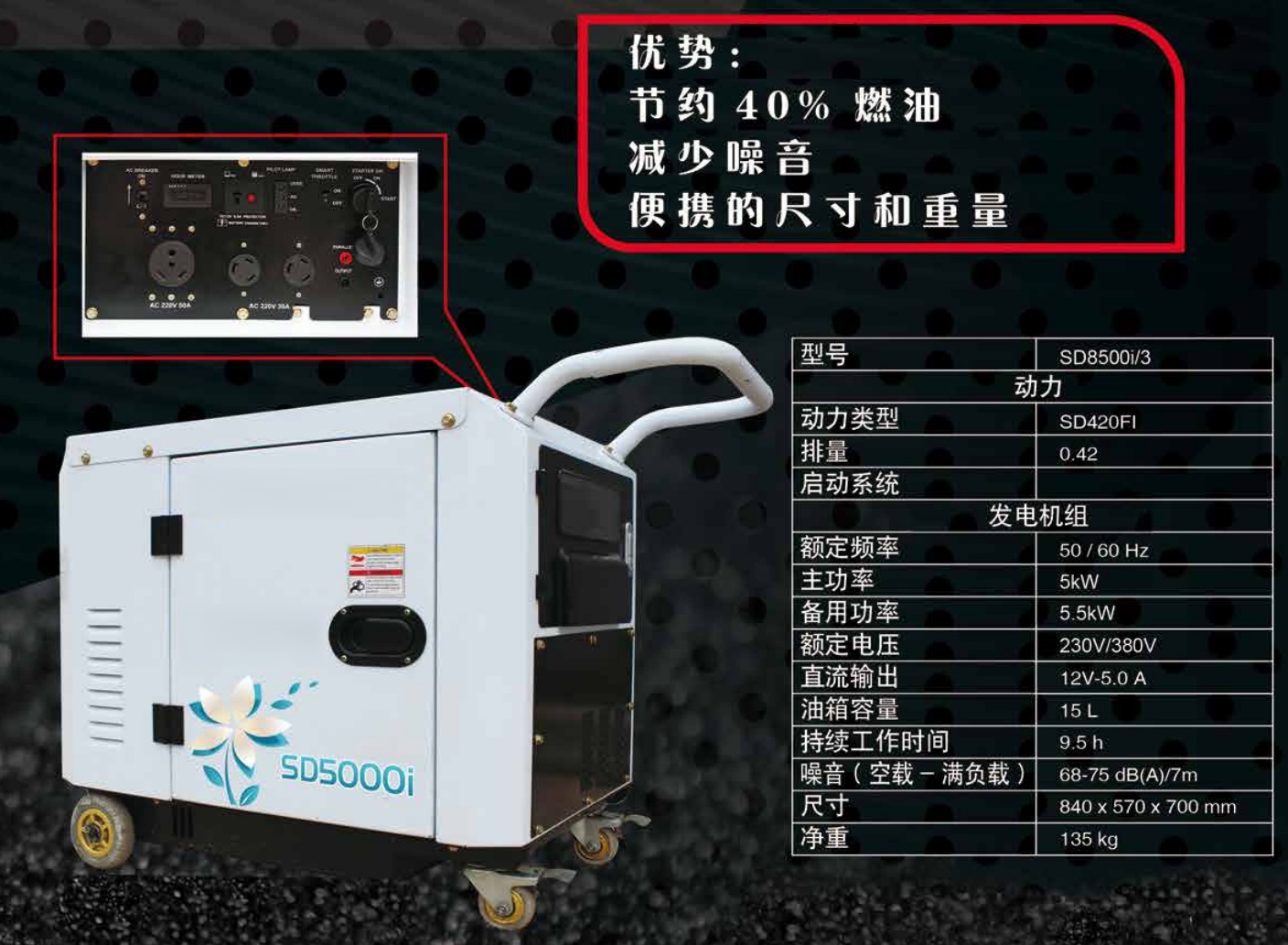
Generator technology has advanced significantly with the introduction of inverter generators. Unlike conventional generators that produce raw AC power, inverter generators use IGBT technology to produce pure sine wave power with less than 3% total harmonic distortion (THD).
GTFI offers both inverter and conventional generators in gasoline and diesel options, with power ranges from 2kW to 15kW.
1. Conventional Generators
How they work: Conventional generators produce AC power directly from the alternator. The engine runs at a constant speed (typically 3600 rpm) to maintain a stable frequency.
- Best for: General power needs, industrial equipment, heavy loads
- Advantages: Lower cost, simpler design, handles large starting surges
- Disadvantages: Less fuel efficient, higher THD (5-10%), noisier
2. Inverter Generators
How they work: Inverter generators produce AC power, convert it to DC, then invert it back to clean AC power using IGBT technology. The engine speed adjusts to match the load.
- Best for: Sensitive electronics, telecom, home backup, camping
- Advantages: Clean power (THD <3%), fuel saving (up to 40%), quiet operation
- Disadvantages: Higher cost, less surge capacity
- GTFI models: Inverter Diesel Silent (5-15kW), Inverter Gasoline Silent (2-8kW)
3. Comparison Table
| Feature | Conventional Generator | Inverter Generator |
|---|---|---|
| THD (Power Quality) | 5-10% | <3% (pure sine wave) |
| Fuel Consumption | Higher | Up to 40% lower |
| Noise Level | 77-85dB | 65-72dB |
| Cost | Lower | Higher |
| Surge Capacity | Good | Limited |
| Engine Speed | Constant 3600rpm | Variable (adjusts to load) |
| Parallel Operation | No | Yes (up to 2 units) |
| Best For | Industrial equipment, heavy loads | Electronics, telecom, home backup |
4. Fuel Efficiency Comparison
- Conventional: Engine runs at full speed regardless of load
- Inverter: Engine speed adjusts to match the load, saving up to 40% fuel
Example: A 5kW conventional generator at 50% load consumes approximately 2.5L/hour. A 5kW inverter generator at the same load consumes approximately 1.5L/hour — saving 1.0L/hour.
5. Power Quality – Why It Matters
- Conventional (THD 5-10%): Acceptable for lights, heaters, power tools, motors
- Inverter (THD <3%): Safe for sensitive electronics — laptops, TVs, medical equipment, telecom, servers
6. Which Should You Choose?
Choose Conventional If:
- You have a limited budget
- You need to power motors and heavy loads
- Power quality is not critical
Choose Inverter If:
- You need to power sensitive electronics
- Fuel efficiency is a priority
- You need quiet operation
- You need parallel capability for expandable power
Practical Selection Checklist
Before requesting a quotation, define the actual electrical load and the operating environment rather than selecting a generator only by its headline kW rating. The best choice balances starting current, continuous load, fuel type, runtime, noise, mobility, service access, and local power requirements.
What to Confirm Before Ordering
- List continuous loads and identify motors, pumps, compressors, welders, or other equipment with high starting current.
- Confirm rated and standby/maximum output figures and keep an appropriate operating margin instead of running continuously at the limit.
- Specify voltage, frequency, single-phase or three-phase output, and any required automatic transfer or remote-start functions.
- Consider fuel availability, expected daily runtime, tank size, refueling access, ambient temperature, altitude, and ventilation.
- For mobile or residential use, check enclosure, noise, wheel/transport requirements, weather protection, and safe exhaust routing.
For a quotation request: For an industrial quotation, provide the load list, target voltage/frequency, expected runtime, application, destination country, and required quantity. Those details make it easier to compare generator configurations on a like-for-like basis.
Need help matching equipment to a specific application? Provide the operating conditions, required quantity, destination, and key technical requirements when requesting a quotation.
❓ Frequently Asked Questions
A: THD (Total Harmonic Distortion) measures power quality. Lower THD (<3%) is safer for sensitive electronics. Conventional generators typically have 5-10% THD.
A: Yes, inverter generators provide clean power suitable for refrigerators, freezers, and other appliances with sensitive electronics.
A: Yes, GTFI inverter generators support parallel operation, allowing you to combine the output of two units for higher power.
A: Yes, under typical partial-load conditions (50-70% load), inverter generators can save up to 40% fuel compared to conventional generators.
💬 Not sure which generator technology is right for you?
Talk to Our Experts →